If you are searching for top-rated interior designers in Singapore for modern minimalist home styles, the hardest part is not finding options, it is telling the genuinely skilled ones apart. Many firms claim to specialise in minimalist homes. Scroll through their Instagram grids and you will see the same white walls, the same handleless cabinetry, and the same warm timber accents repeated across dozens of projects. The challenge is a shortage of ways to distinguish designers who truly understand the aesthetic from those who simply borrowed it.
Shortlisting the right interior designer for a modern minimalist HDB or condo is harder than it looks. Quotes for what appears to be identical scope can differ by tens of thousands of dollars, a variance that experienced homeowners often cite as one of the most confusing parts of the process. Timelines shift. And by the time you discover a designer is not a good fit, you may already have signed a contract. This guide gives you a concrete framework to evaluate portfolios, benchmark costs, ask the right questions, and spot the warning signs before any money changes hands.
Throughout this guide, we reference Todzterior, a Singapore-based interior design and renovation studio with experience across residential and commercial projects. Their end-to-end approach covers everything from the initial brief through to renovation handover, which makes them a useful illustration of what a well-structured design process looks like in practice.
What a strong minimalist portfolio actually looks like
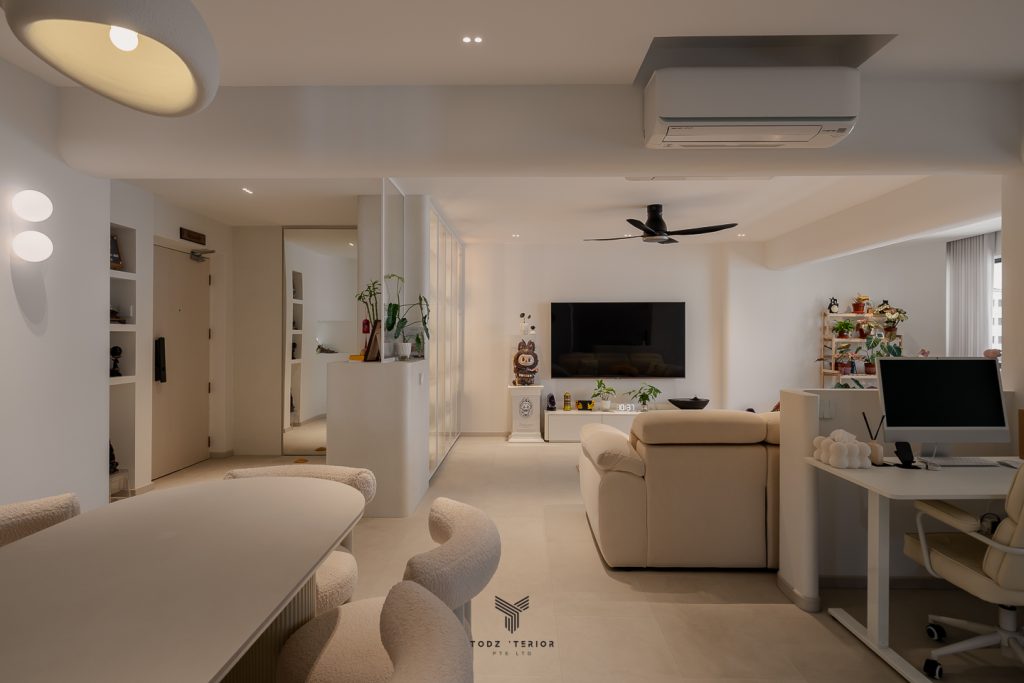
The portfolio is your first and most important filter. Looking at a portfolio without knowing what to evaluate is just scrolling through pretty pictures. A designer with genuine minimalist expertise shows consistent design decisions across every project, not just a single well-styled hero shot staged for photography.
Look beyond aesthetics and pay attention to deliberate material restraint, concealed storage integration, cohesive colour palettes, and intentional lighting placement. A strong minimalist portfolio is consistent: the same disciplined thinking shows up whether you are looking at a 3-room HDB or a condo master bedroom. If the portfolio mixes heavy ornate millwork in one project and bare-bones Japandi in the next, you are looking at a designer who follows trends rather than one who understands the underlying principles.
Material choices and restraint
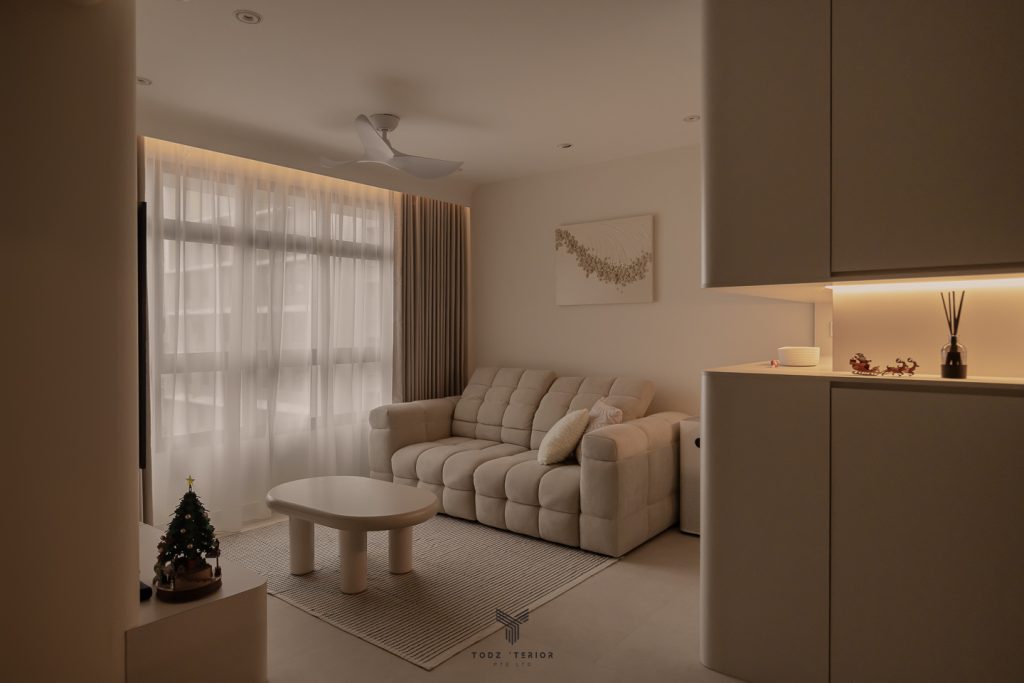
Strong minimalist designers work within tight material palettes, typically two to three finishes across a project, and apply them deliberately. Look for consistency in how surfaces meet: skirting details, edge profiles, and grout lines are often where the discipline shows or breaks down.
Lighting and spatial planning
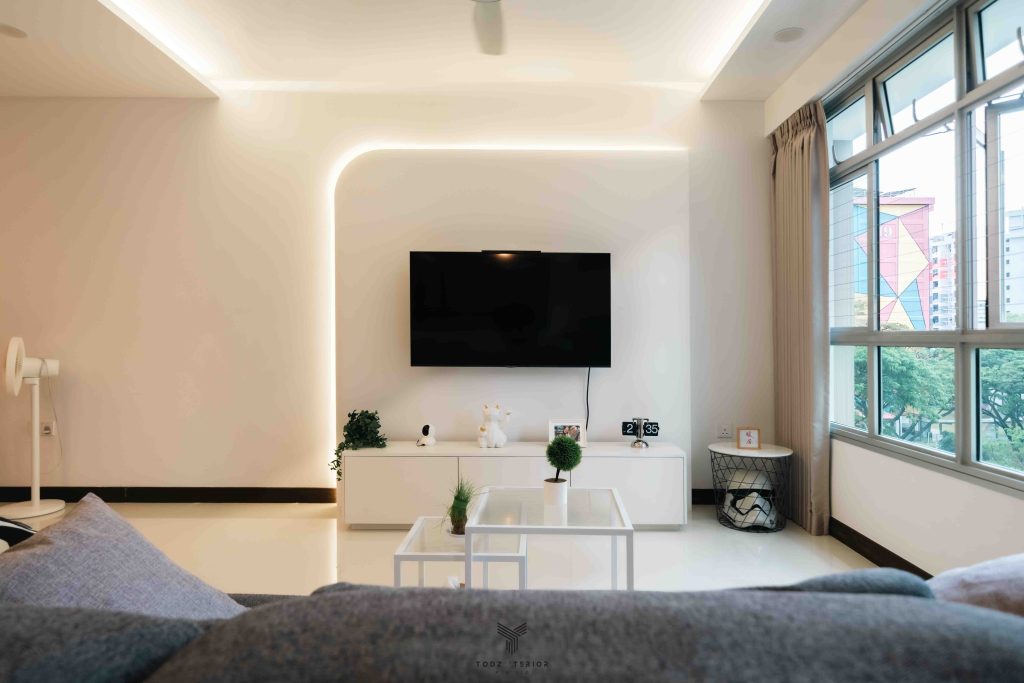
Lighting is rarely decorative in a well-executed minimalist interior. It is structural. Look for portfolios that show layered ambient, task, and accent sources rather than a single central fitting, and note whether the designer has thought about natural light and how the space changes through the day.
Storage integration
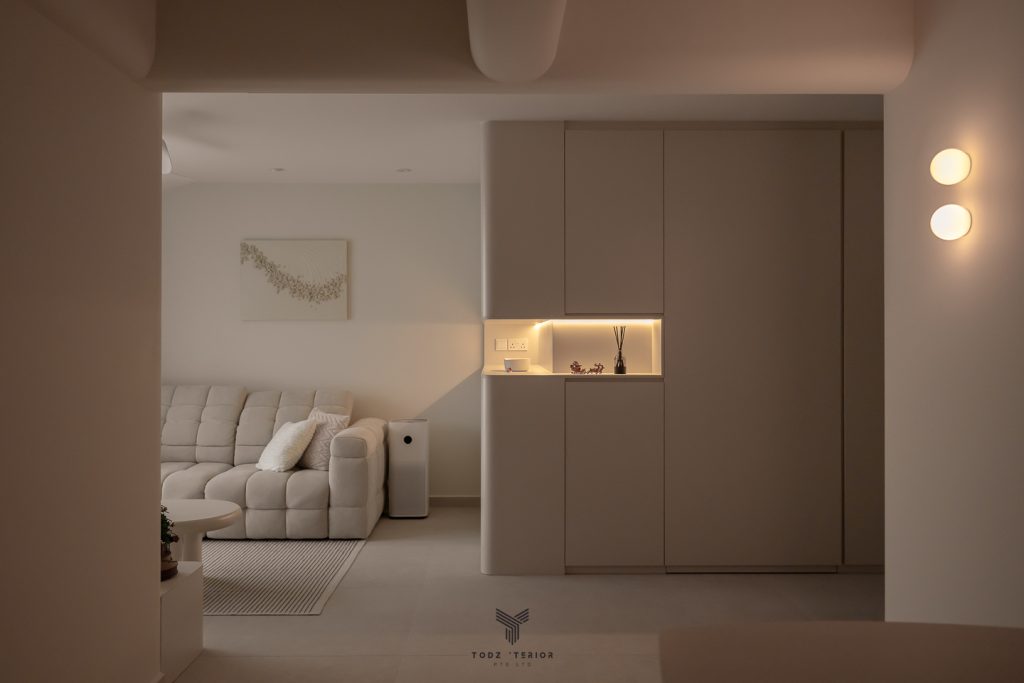
Built-in storage that disappears into the architecture, rather than sitting on top of it, is one of the clearest markers of minimalist competence. Ask to see how storage has been resolved across different room types within the same project.
Singapore’s residential layouts carry constraints that generic minimalist design work does not prepare a designer for. HDB flats have fixed structural walls, prescribed setback rules, and renovation guidelines that require HDB-registered contractors for permit submission. Condos are governed by MCST rules that vary by development. A designer who has repeatedly worked with 4-room BTO flat layouts, for instance, will know instinctively how to resolve the long entry corridor, how to open or enclose the kitchen depending on your cooking habits, and how to layer storage without making the space feel heavy.
When you contact a shortlisted firm, ask specifically for before-and-after photos taken from the same angle in the same room type, and request annotated floor plans that show the original layout alongside the redesigned version. This reveals how a designer solved a spatial problem, not just how well they styled the result. Reputable firms that do this work regularly should have these materials available to share on request.
What a minimalist HDB or condo renovation actually costs
Budget ambiguity is one of the most common sources of frustration for first-time homeowners. The ranges below reflect current Singapore market data and give you a baseline against which to sense-check any quotes you receive.
For a 2-room HDB, a light-to-move-in-ready minimalist scope typically runs between S$15,000 and S$30,000, covering painting, vinyl flooring, basic electrical works, lighting, and modest carpentry.
A 3-room HDB falls in the S$25,000 to S$40,000 range for a standard minimalist renovation. Resale flats sit toward the upper end because they often require hacking, rewiring, and waterproofing that new BTO units do not.
For a condo at 1,000 to 1,200 sq ft, expect S$45,000 to S$80,000, with the higher end reflecting deeper carpentry, kitchen overhauls, and bathroom upgrades.
On timelines, a full project from brief to handover realistically takes three to four months. Design and planning occupy two to six weeks. Procurement and approvals, including HDB permit review or MCST clearance for condos, add another one to four weeks. On-site renovation runs eight to twelve weeks for a standard project, and ten to fourteen weeks for heavier resale work. Minimalist renovations generally sit at the lower end of these ranges because they involve fewer built-ins and less demolition than elaborate or eclectic styles.
Most quotes exclude loose furniture, appliances, and décor. The items that most commonly push the final number upward are custom carpentry, wet works (waterproofing, tiling, and screeding), electrical and plumbing upgrades, and imported materials with long lead times. In resale units especially, wet works and rewiring are frequent surprises that inflate both cost and timeline if not scoped properly at the start.
Red flags, credentials, and what to ask before you sign
Credentials do not guarantee a good outcome, but they narrow your risk meaningfully. Before your first meeting with any firm, confirm that the business is registered with ACRA. For renovation work in HDB flats, the contractor must be registered with HDB directly. CaseTrust accreditation is voluntary but signals a meaningful commitment to consumer protection: CaseTrust-accredited renovation firms are required to hold a Deposit Performance Bond and use a standardised renovation contract, which protects your prepayment and gives you a clear framework for disputes.
Verified reviews on platforms like Google Business Profile add another credibility layer. One or two glowing reviews are easy to manufacture; a consistent track record of detailed, project-specific reviews across many clients is much harder to fake.
On defects liability, ask whether this period is included in the contract and how long it runs, common practice in Singapore renovation contracts ranges from six to twelve months, though terms vary by firm. Confirm the scope in writing and ask specifically what the rectification process looks like after handover.
During the consultation itself, the questions you ask reveal far more than any brochure will. Find out who your dedicated project manager is and how frequently they will update you during the renovation. Ask to see a sample renovation contract before you commit to anything. Request references from past clients with a similar flat type and ask whether you can speak to them directly. A designer who is reluctant to answer these questions directly is showing you exactly how they will communicate once work begins.
The red flags that should give you serious pause are: quotes that bundle everything into lump sums without itemised line items; pressure to sign quickly or take advantage of a limited-time promotion; requests for upfront deposits above 30 percent before any work starts; portfolios that show only renders and CGI with no completed photography; and vague answers about who the subcontractors are. Each of these patterns points to the same underlying problem: a firm that is not confident in its own process.
How top-rated interior designers in Singapore approach modern minimalist renovations, a closer look at Todzterior
Rather than claiming expertise, let us walk through what a Todzterior minimalist project actually looks like. A typical brief might come from a first-time BTO owner who wants a warm, clutter-free home that works hard for a two-person household. The key spatial challenges in a standard 4-room BTO are familiar: a long entry corridor that wastes usable area, a kitchen that feels separate from the communal zone, and three bedrooms that need to serve different functions without feeling cramped.
Todzterior’s approach to this kind of project centres on built-in storage that disappears into the architecture rather than sitting on top of it, a flooring strategy that reads continuously across the living, dining, and kitchen zones to make the flat feel larger, and a lighting plan that layers ambient, task, and accent sources rather than relying on a single central fitting. The result is a flat that functions fully for daily life but reads as visually calm because the storage is concealed and the finishes are restrained.
Their process follows five clear stages:
- Initial consultation, focused entirely on understanding how you actually live
- Concept proposal and design direction, aligned to your lifestyle and aesthetic
- Detailed design and space planning, with annotated floor plans
- Site measurement and full renovation execution
- Final handover with aftercare
Each stage creates a decision point where you can review, adjust, and confirm before the next phase begins. For first-time homeowners who have never managed a renovation, this structure removes the guesswork and reduces the risk of costly mid-project changes.
The end-to-end model also addresses one of the most common sources of renovation problems: the gap between design intent and site execution. When separate designers and contractors are working from different briefs, decisions made on-site can quietly erode the design. At Todzterior, the team that designed your space also oversees its construction, which means the details that matter to a minimalist interior, flush joints, consistent reveals, clean material transitions, are protected through to handover.
How to find top-rated interior designers in Singapore for modern minimalist homes and build your shortlist
After initial research, narrow your list to three to five firms using the following criteria: their portfolio demonstrates consistent minimalist expertise; they have documented experience with your specific flat type; and their indicative budget range aligns with what you have available. If a firm falls short on any one of these before you even meet them, remove them from the list. Your time in consultations is limited and should be spent on the firms most likely to be a genuine fit. This is an author recommendation based on common advisory practice, there is no fixed industry rule, but a shortlist of this size gives you enough comparison without becoming unmanageable.
During each consultation, score the firm on five dimensions: how clearly they communicate, the quality of their minimalist portfolio evidence, how they handle questions about HDB or MCST approvals, the structure and transparency of their contract, and most importantly, how much they listened before they started talking about solutions. A designer who spends the first meeting pitching ideas without asking how you cook, whether you work from home, or how much storage you genuinely need is designing for themselves, not for you.
Once you have quotes from three to five firms, compare them carefully, not the headline numbers, but what each quote includes and excludes, the payment milestone structure, the defects liability terms, and the communication protocols during the renovation. The cheapest quote is rarely the best value when you account for what has been left out and the cost of rectifications when corners are cut. Price should be one input among many, not the deciding factor.
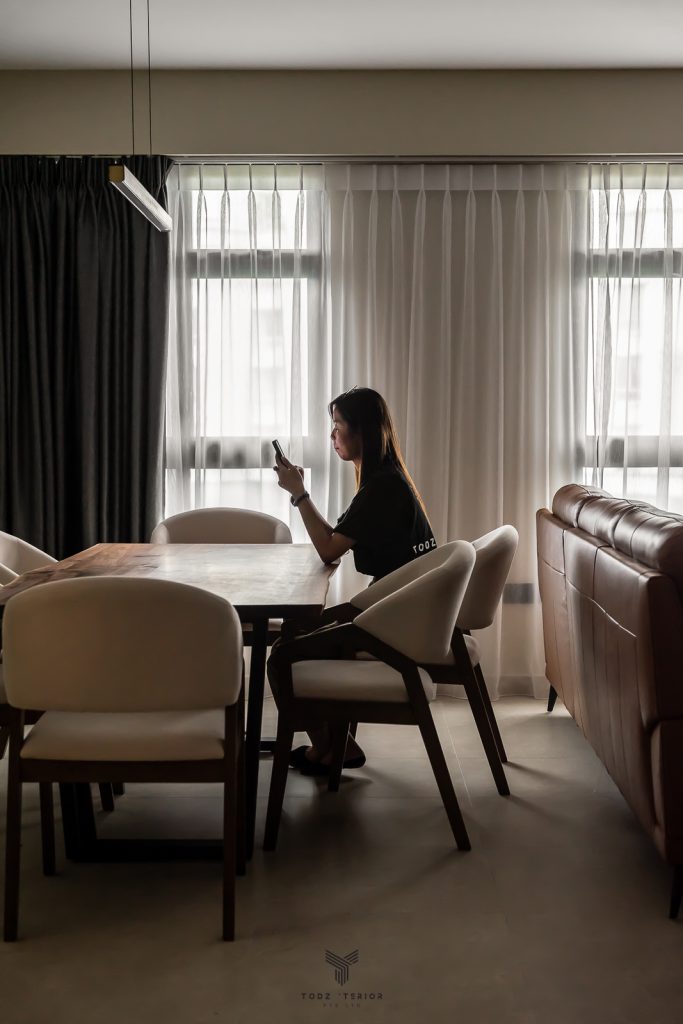
The right fit makes all the difference
Finding the right top-rated interior designer in Singapore for a modern minimalist home is not about the studio with the most followers or the highest number of awards. It is about finding the right match for your space, your lifestyle, and the way you want the process to feel from first consultation through to handover. A minimalist home that does not function for the people living in it is just an empty-looking space. The right designer understands that restraint in the design is not about having less, it is about making every element work harder.
Use the framework in this guide to evaluate portfolios honestly, benchmark your budget against realistic Singapore cost ranges, ask the questions that reveal how a designer actually works, and take the red flags seriously. Todzterior is a considered starting point for homeowners who want a structured, end-to-end process with a team that manages everything from concept to completion. If you are ready to take the next step, visit Todzterior’s portfolio to see their minimalist residential projects, or book a consultation to talk through your brief with their team directly.