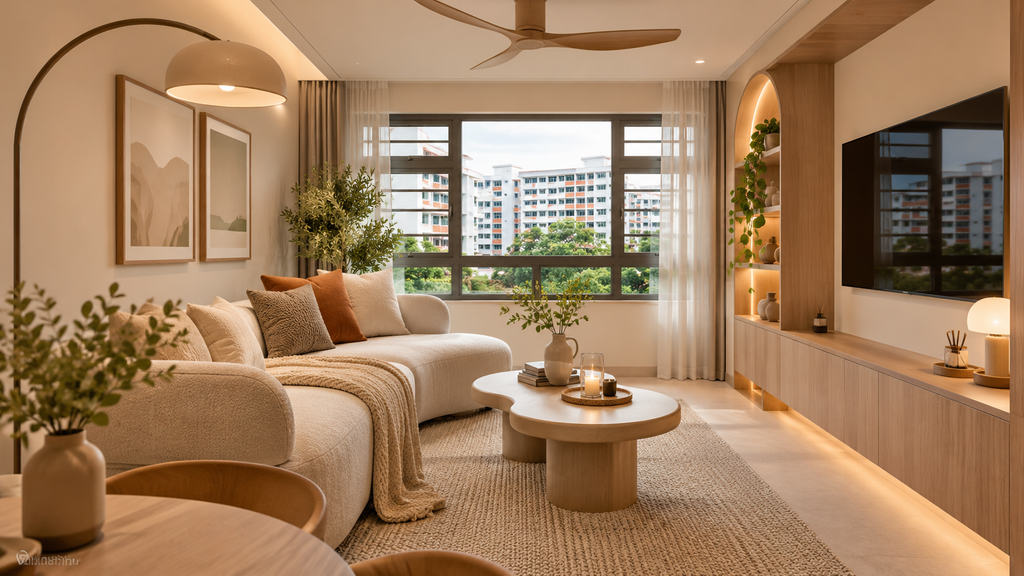
Interior design in Singapore is evolving beyond simply creating beautiful spaces. As homeowners prepare for 2027, the focus is shifting towards homes that feel warmer, more personalised, and thoughtfully designed for everyday living.
From cosy minimalist interiors to sophisticated natural materials and multifunctional layouts, the interior design trends in Singapore for 2027 are expected to embrace comfort, functionality, and timeless appeal.
Whether you’re renovating a newly collected BTO flat, transforming a resale HDB apartment, or refreshing your condominium, these emerging design directions offer inspiration for creating a home that reflects your lifestyle.
In this guide, Todzterior explores eight interior design trends to look out for in 2027, along with practical ideas for incorporating them into modern Singapore homes.
What Is Shaping Singapore Interior Design in 2027?
Singapore homeowners are increasingly looking beyond purely aesthetic renovation choices. A well-designed home should make everyday routines easier while creating a welcoming environment where families can relax, work, and spend time together.
Looking ahead to 2027, several design priorities are expected to influence home interiors:
- Warm and inviting spaces: Softer neutral colours, natural wood finishes, and layered textures create a comfortable alternative to stark minimalist interiors.
- Smarter use of space: Multifunctional furniture, concealed storage, and flexible layouts help homeowners maximise available space.
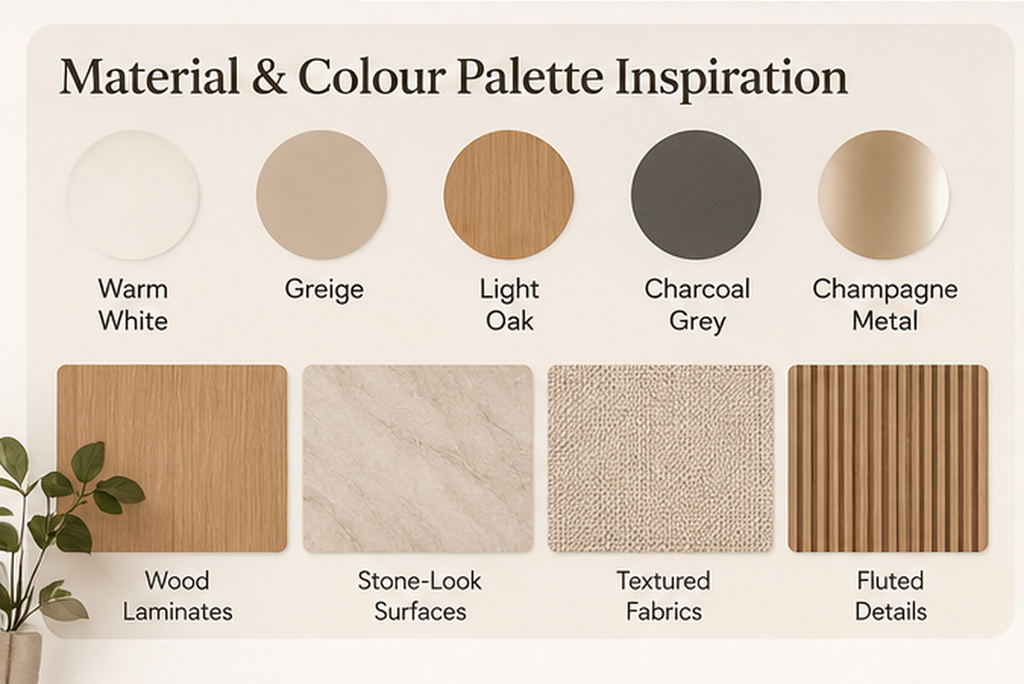
- Natural and timeless materials: Wood-look finishes, stone textures, and tactile fabrics add depth while creating a lasting visual appeal.
- Personalised design: Homes increasingly reflect individual lifestyles, with customised carpentry, curated furnishings, and meaningful decorative details.
- Technology and comfort: Integrated lighting, smart-home features, and wellness-focused elements contribute to more convenient and relaxing living environments.
For Singapore’s HDB flats, where efficient space planning remains essential, the most successful designs will balance visual appeal with everyday practicality.
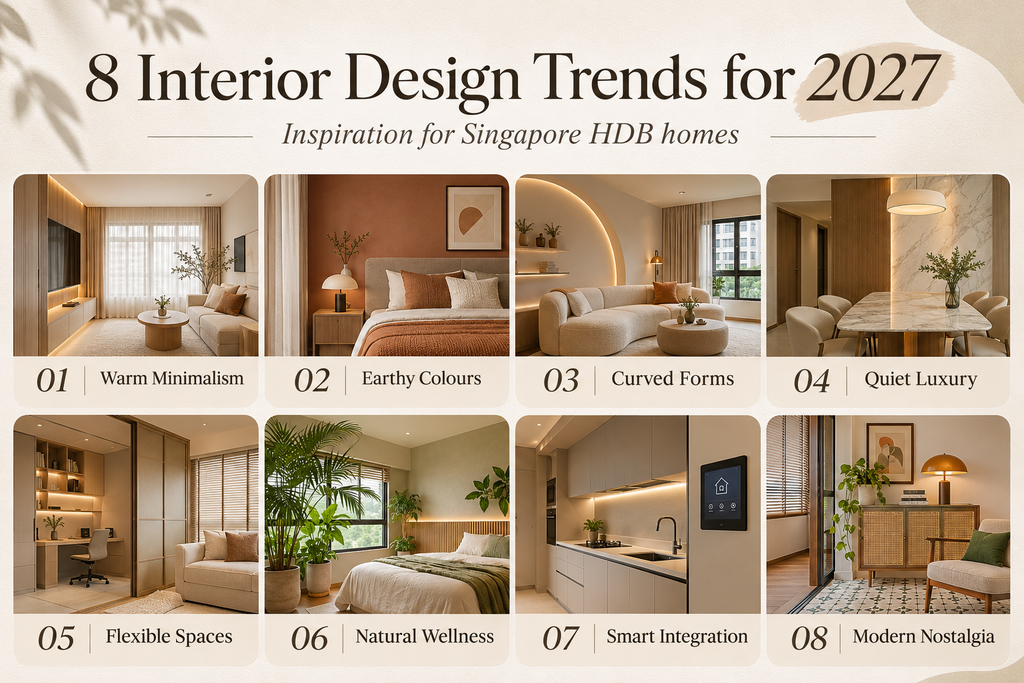
From warm minimalism to modern nostalgia, the following eight trends offer fresh possibilities for Singapore homeowners planning their next renovation.
1. Warm Minimalism & Evolved Japandi: A Softer Approach to Modern Living
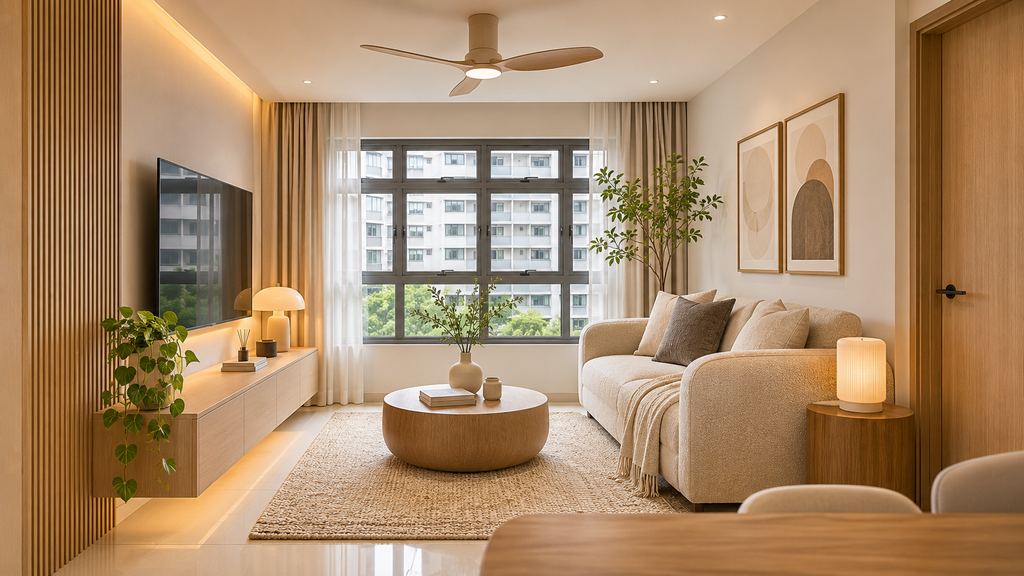
Minimalism continues to evolve in 2027, moving away from stark white interiors towards warmer, more inviting spaces. Combining Japanese simplicity with Scandinavian comfort, warm minimalism and evolved Japandi interior design focus on natural textures, soft neutral tones, and thoughtfully selected furnishings.
Instead of creating a home that feels overly plain, this design approach introduces depth through light wood finishes, textured fabrics, and subtle earthy accents.
The result is a timeless interior that feels both elegant and comfortable, making it particularly suitable for modern Singapore HDB flats.
Key Features of Warm Minimalist Interiors
- Warm neutral colours: Cream, beige, taupe, and greige create a soothing foundation.
- Natural wood finishes: Light oak, ash wood, and warm walnut accents bring organic warmth.
- Layered textures: Linen curtains, woven rugs, and textured upholstery prevent interiors from feeling flat.
- Clean and functional carpentry: Streamlined TV consoles and concealed storage maintain a clutter-free environment.
- Soft ambient lighting: Warm LED lighting and minimalist fixtures create a welcoming atmosphere.
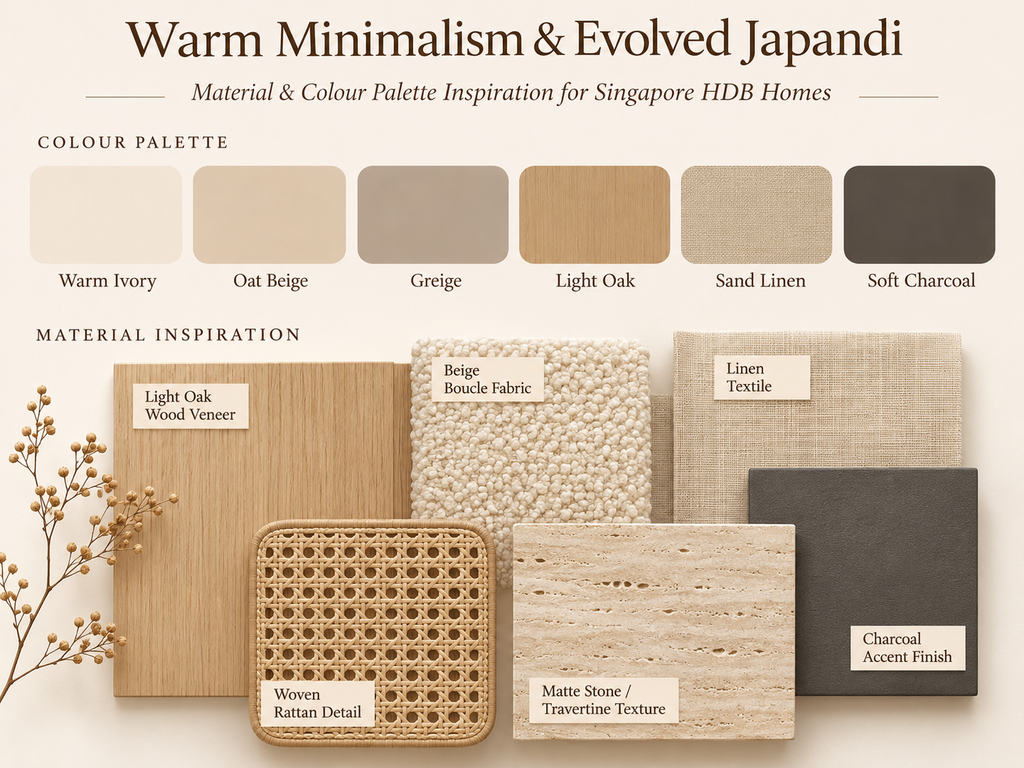
How to Achieve This Look in a Singapore HDB Flat
For a 3-room or 4-room HDB apartment, begin with a warm off-white wall colour and pair it with light wood cabinetry to create a cohesive visual flow.
Choose furniture with simple silhouettes and comfortable proportions, while incorporating built-in storage to keep everyday items organised.
To complete the look, introduce soft lighting, natural fabrics, and a few carefully selected decorative pieces.
Todzterior Design Tip: Avoid using too many similar beige shades without contrast. Combining different wood grains, fabric textures, and subtle darker accents helps create a warm minimalist home that feels sophisticated rather than monotonous.
2. Earthy Colours & Layered Textures: Bringing Warmth and Character Into Your Home
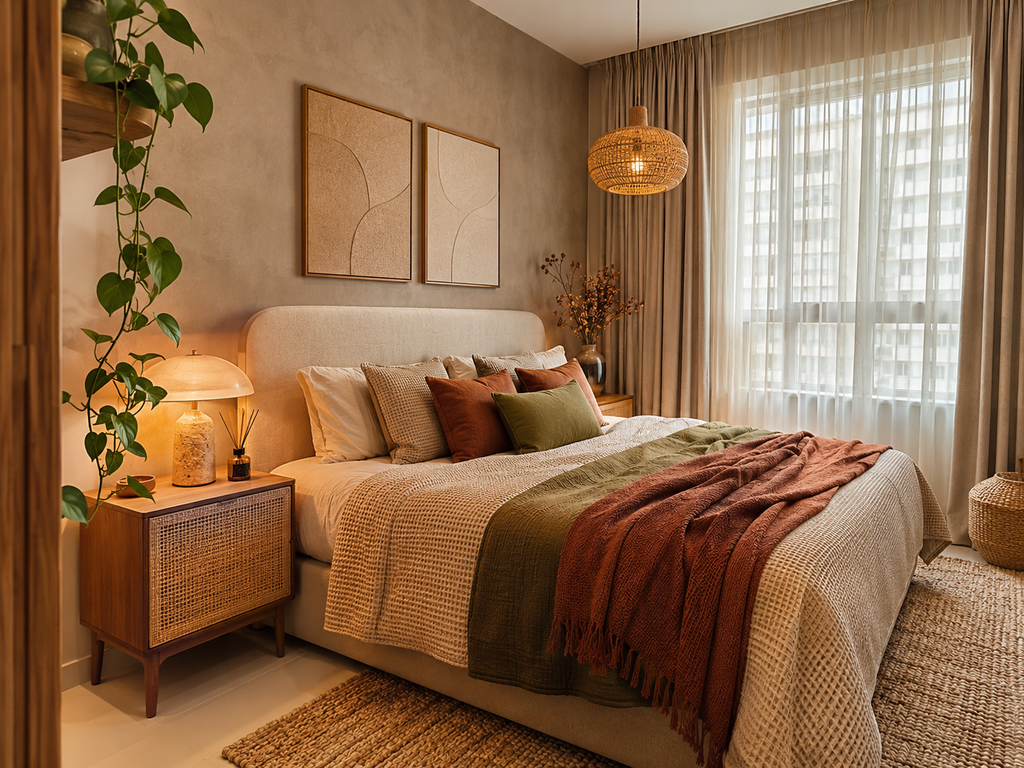
Earthy colour palettes are expected to remain a defining feature of Singapore interior design trends in 2027, as homeowners embrace richer tones and natural textures to create welcoming living spaces.
Moving beyond conventional white and grey interiors, this trend introduces shades of terracotta, olive green, taupe, and warm brown. When paired with layered fabrics and organic finishes, these colours add depth and personality without overwhelming the room.
For Singapore HDB homes, earthy interiors provide an elegant way to introduce character while maintaining a calm, contemporary atmosphere.
Key Features of Earthy Interior Design
- Nature-inspired colours: Terracotta, clay, olive green, and warm taupe create a grounded, inviting palette.
- Textured wall finishes: Subtle limewash-effect paints and textured wallpapers add visual depth.
- Layered soft furnishings: Linen bedding, woven cushions, and textured throws introduce warmth and comfort.
- Natural material accents: Wood-look cabinetry, rattan details, and stone-inspired surfaces complement earthy tones.
- Warm lighting: Soft bedside lighting and understated pendant fixtures enhance the cosy atmosphere.
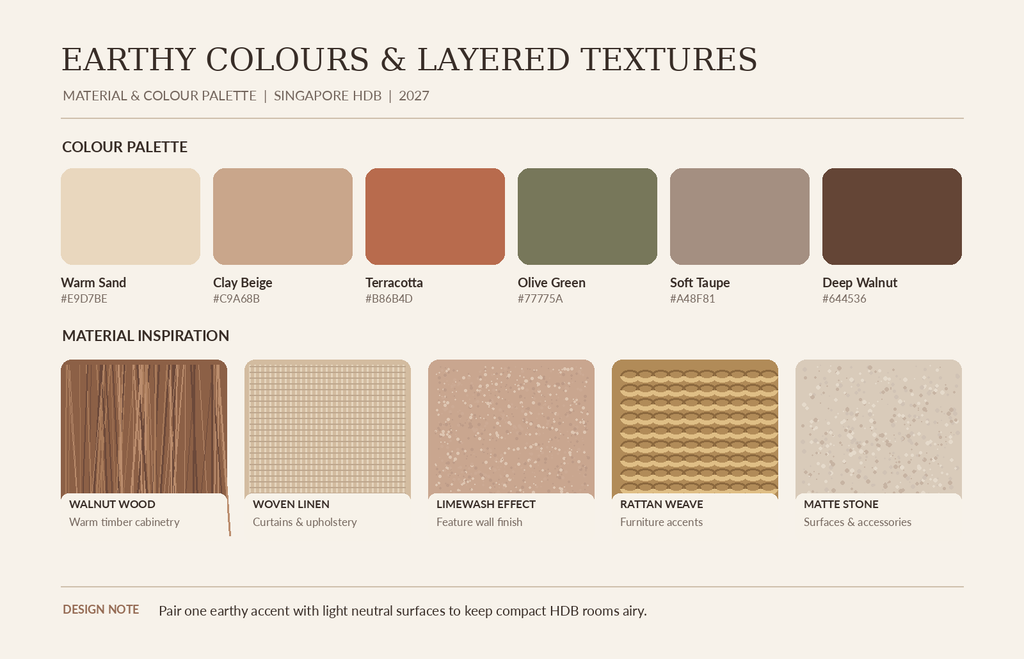
How to Incorporate Earthy Colours Into Your Singapore HDB
Start by choosing one earthy shade as your main accent colour, such as terracotta for a bedroom feature wall or muted olive green for customised cabinetry.
Balance stronger colours with lighter neutrals, including cream, sand, or warm beige, to prevent smaller HDB rooms from feeling enclosed.
To create a layered look, combine different materials such as linen, timber, woven textures, and matte finishes rather than introducing too many competing colours.
Todzterior Design Tip: For compact HDB bedrooms, keep larger surfaces neutral and introduce earthy colours through bedding, an accent wall, or small furniture pieces. This creates a cohesive interior while allowing the room to remain bright and visually spacious.
3. Curved Forms & Sculptural Details: Softening Modern Singapore Interiors
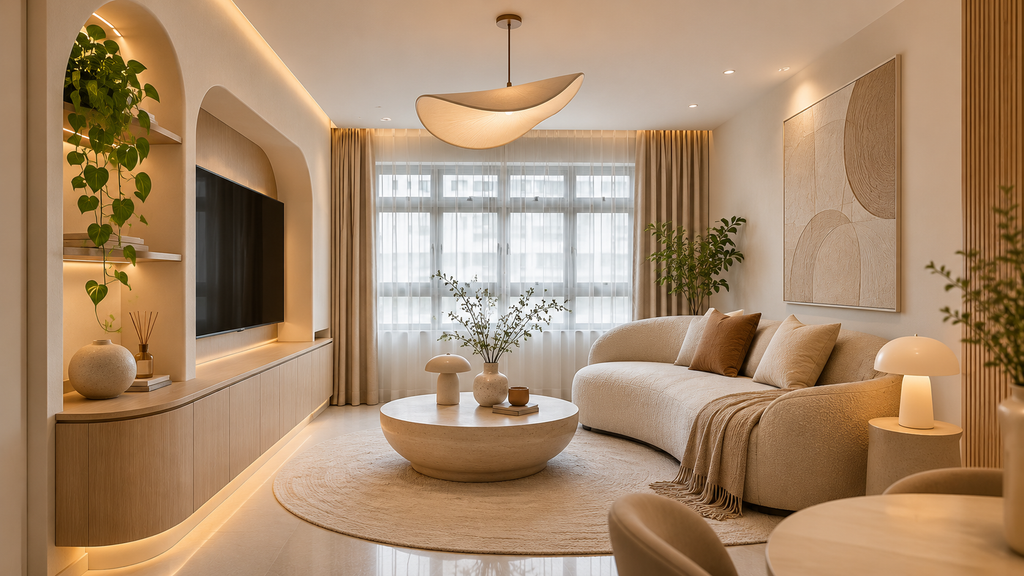
Sharp lines and boxy furniture are giving way to softer, more organic shapes. As one of the emerging interior design trends in Singapore for 2027, curved forms introduce a sense of movement, warmth, and understated elegance into contemporary homes.
From rounded sofas and sculptural coffee tables to curved cabinetry and softly arched wall details, this design approach creates visually inviting interiors without compromising functionality.
For Singapore HDB homeowners, incorporating a few thoughtfully selected curves can soften compact living spaces while maintaining a clean, modern aesthetic.
Key Features of Curved Interior Design
- Rounded furniture: Curved sofas, oval dining tables, and circular coffee tables introduce softer silhouettes.
- Sculptural lighting: Organic pendant lights and rounded table lamps serve as subtle statement pieces.
- Curved carpentry: Rounded cabinet corners and gently curved TV consoles create a seamless appearance.
- Soft architectural details: Arched niches and rounded wall features introduce visual interest without excessive decoration.
- Refined neutral palettes: Ivory, warm beige, muted taupe, and soft clay tones complement the organic aesthetic.
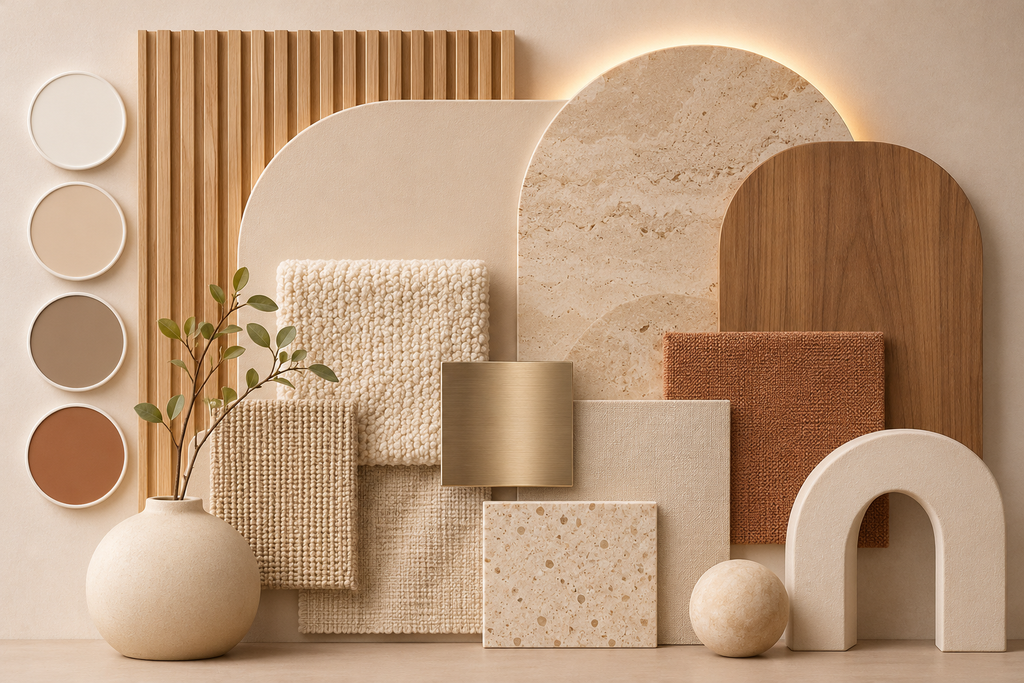
How to Incorporate Curved Designs Into Your HDB Home
You don’t need a complete renovation to introduce this trend. Start with an oval coffee table, rounded accent chair, or sculptural pendant light to soften the appearance of your living room.
For homeowners planning a full renovation, consider custom carpentry with gently rounded edges or a curved display niche that complements the existing layout.
Keep the overall design balanced by combining curved furnishings with simple, straight-lined cabinetry. This prevents smaller HDB spaces from feeling overly decorative.
Todzterior Design Tip: In compact HDB living rooms, prioritise furniture with rounded corners instead of large, dramatically curved pieces. This creates a softer aesthetic while preserving practical walking space and furniture clearance.
4. Quiet Luxury & Timeless Materials: Understated Elegance for Modern Homes
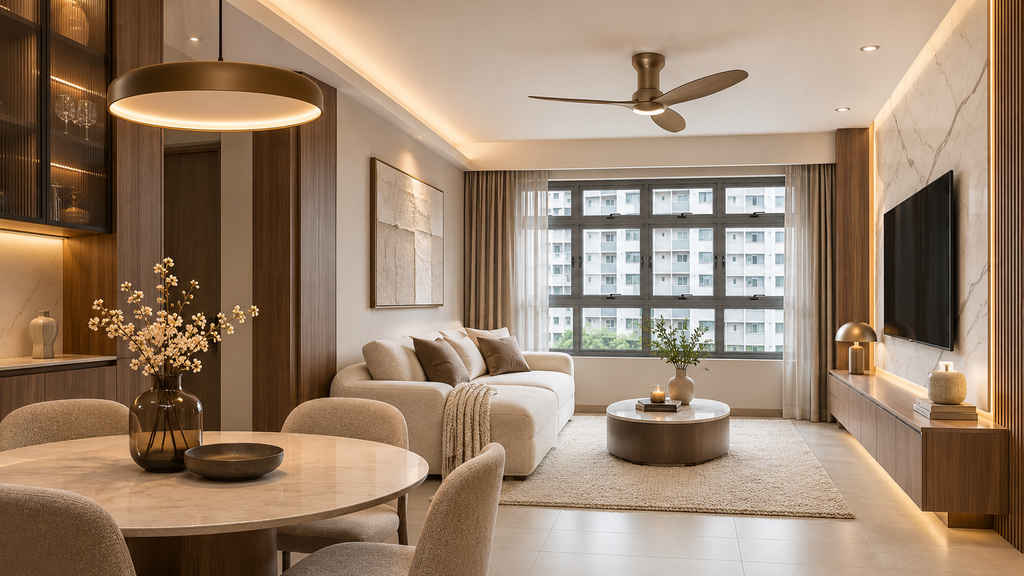
Luxury interior design is taking a more understated direction in 2027. Instead of extravagant decorative features and overly elaborate finishes, quiet luxury interior design focuses on quality materials, refined details, and timeless sophistication.
This emerging trend embraces natural stone textures, rich wood finishes, subtle metallic accents, and beautifully crafted furniture to create interiors that feel elegant without appearing excessive.
For Singapore HDB homeowners, quiet luxury offers an opportunity to achieve a premium aesthetic through carefully selected materials, coordinated colours, and well-designed custom carpentry.
Key Features of Quiet Luxury Interiors
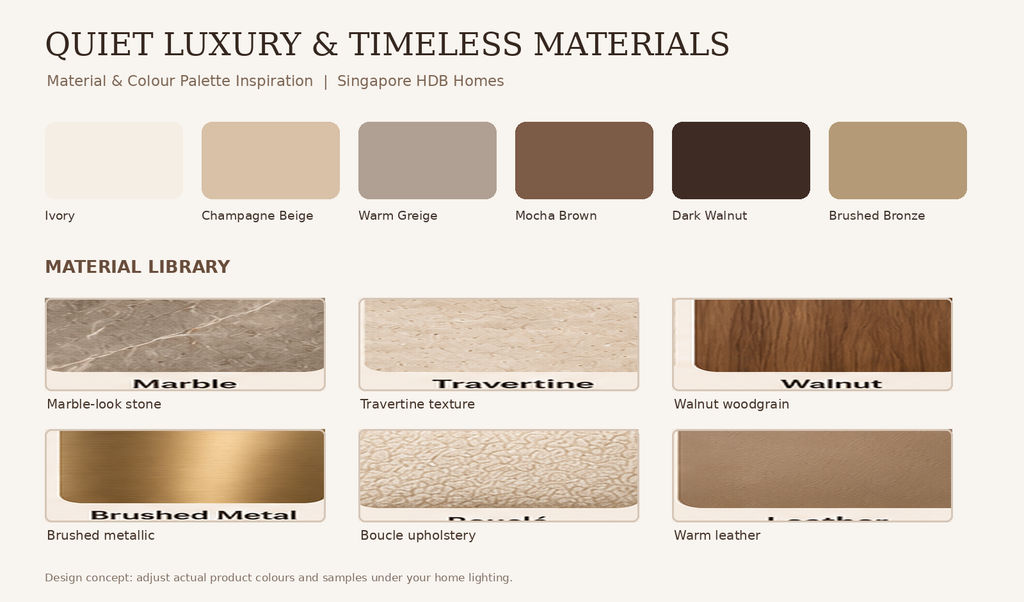
- Rich wood finishes: Walnut and dark oak laminates introduce warmth, depth, and a refined appearance.
- Elegant stone surfaces: Marble-look porcelain tiles, sintered stone, and natural stone accents create subtle visual interest.
- Muted colour palettes: Champagne beige, warm greige, taupe, and chocolate brown establish a sophisticated foundation.
- Refined metallic details: Brushed champagne gold, bronze, and satin nickel add understated elegance.
- Seamless custom carpentry: Concealed storage, clean cabinet lines, and coordinated finishes contribute to a polished interior.
How to Achieve Quiet Luxury in a Singapore HDB Flat
Creating a luxurious interior doesn’t necessarily require expensive materials throughout your entire home.
Begin by selecting one statement feature, such as a marble-look TV feature wall or a walnut-finish built-in cabinet, and complement it with neutral flooring and simple furniture.
For a 4-room or 5-room HDB, consider pairing warm wood cabinetry with a stone-look dining tabletop and subtle metallic finishes.
The key is maintaining visual consistency while investing in quality finishes for the areas that receive the most daily use.
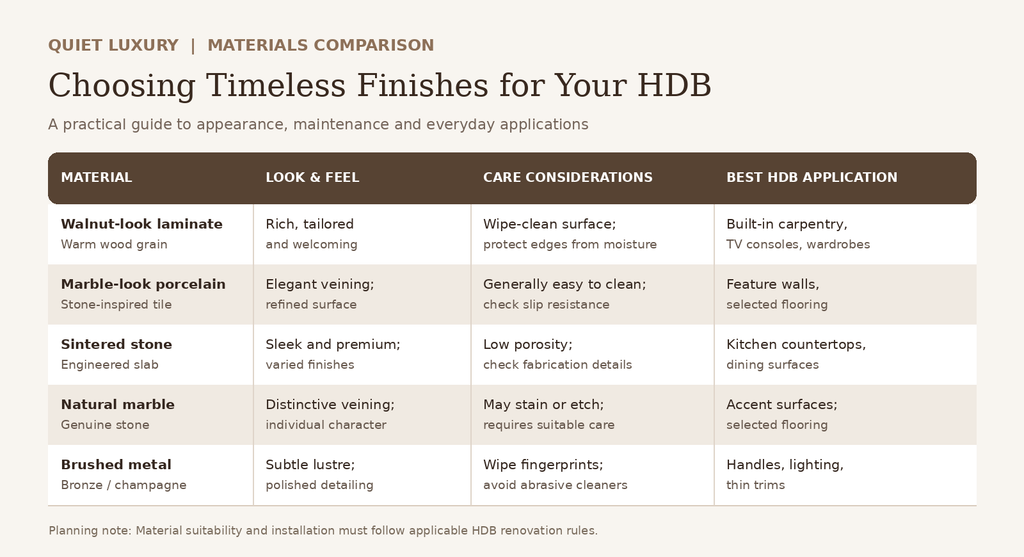
Todzterior Design Tip: Prioritise durable, easy-to-maintain materials when designing your HDB home. High-quality laminates, porcelain tiles, and selected stone-look finishes can create a sophisticated appearance without the maintenance requirements of some natural materials.
When changing flooring or wall finishes, ensure the proposed works comply with HDB’s renovation guidelines and applicable permit requirements.
5. Multifunctional & Flexible Living Spaces: Smarter Designs for Singapore HDB Homes
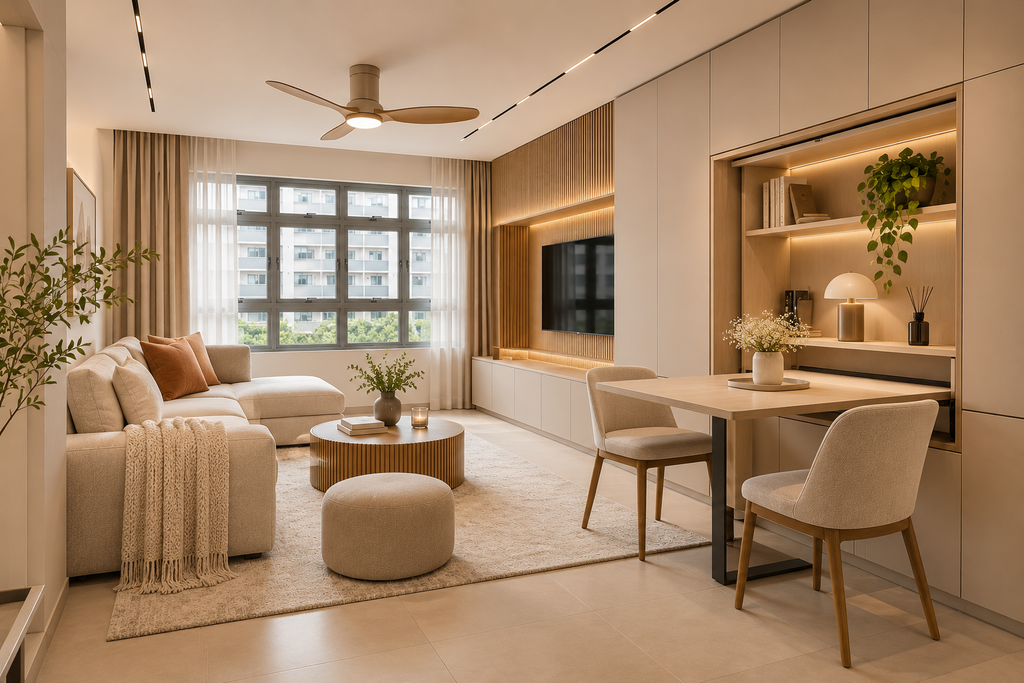
As Singapore homeowners look for ways to maximise their living spaces, multifunctional interior design is expected to become an increasingly important trend in 2027.
Rather than dedicating every room to a single purpose, this approach creates flexible spaces that adapt to everyday activities, from working at home and entertaining guests to family relaxation.
For compact HDB flats, thoughtful space planning and customised carpentry can make a significant difference in how comfortably a home functions.
Key Features of Multifunctional Interior Design
- Integrated workspaces: Built-in study desks and concealed workstations make working from home more convenient.
- Space-saving furniture: Extendable dining tables, storage benches, and multifunctional seating maximise usable space.
- Smart custom carpentry: Floor-to-ceiling cabinetry and integrated storage help reduce visual clutter.
- Flexible room layouts: Sliding partitions and movable furniture allow spaces to serve different purposes.
- Seamless design: Consistent colours, materials, and cabinetry finishes create a cohesive interior.
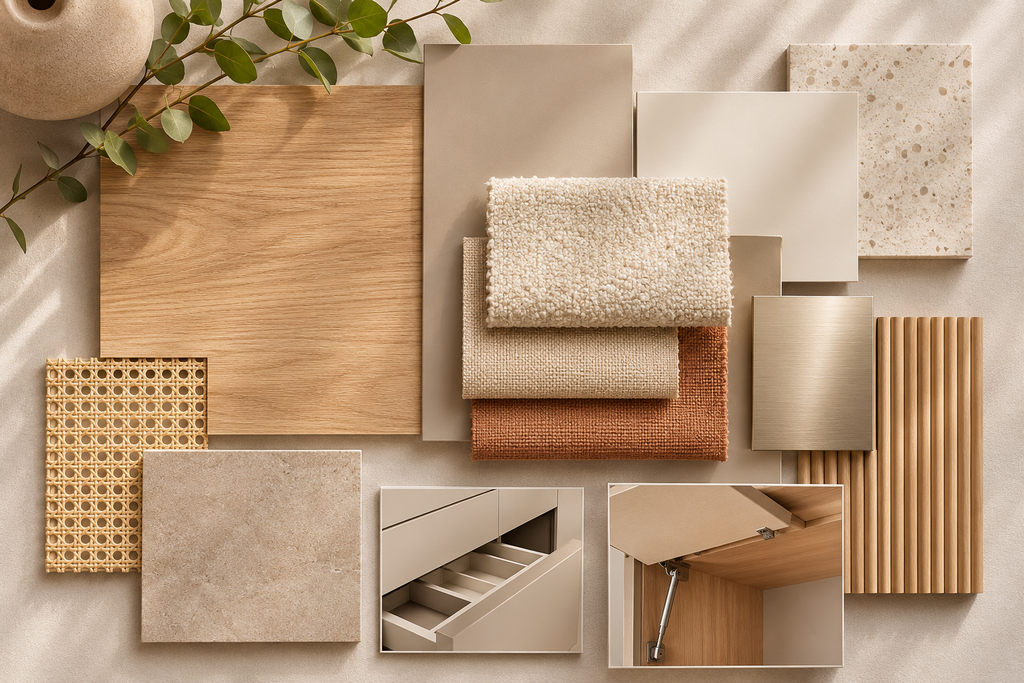
How to Create a Flexible Living Space in Your HDB
For a 3-room or 4-room HDB flat, consider integrating a compact study area into the living room using built-in cabinetry that matches your TV feature wall.
A dining bench with concealed storage or an extendable table can also help maximise functionality without taking up excessive floor space.
Homeowners who require occasional guest accommodation can explore multifunctional bedroom furniture, such as a daybed with storage or a foldaway bed system.
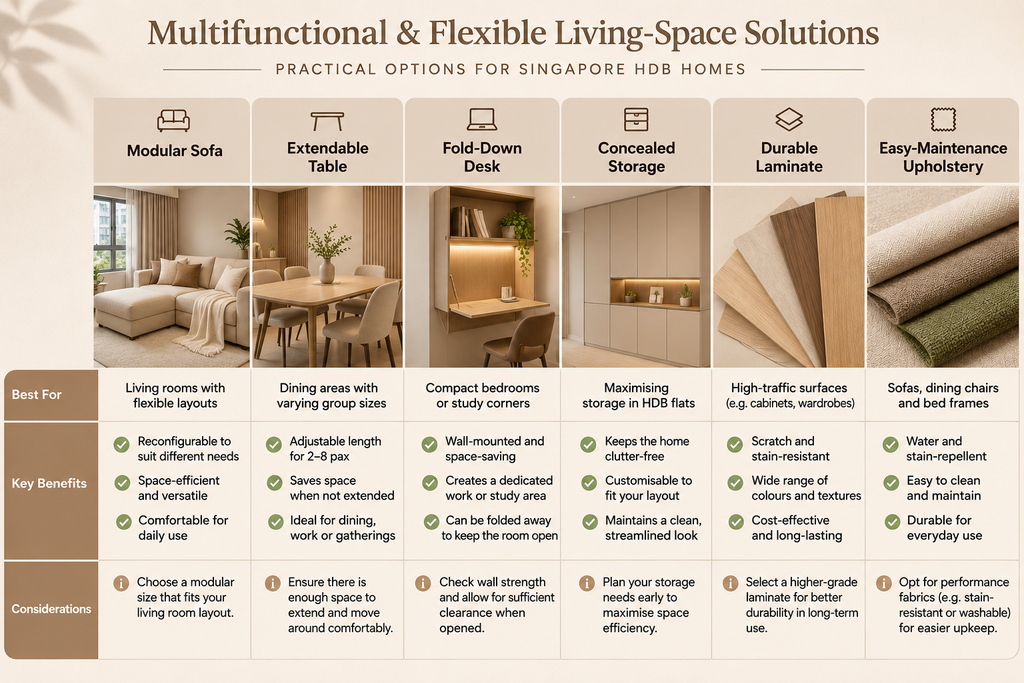
Todzterior Design Tip: Before investing in multifunctional furniture or built-in carpentry, consider how frequently each function will be used. Prioritise comfortable circulation space, accessible storage, and furniture that is easy to operate.
For renovations involving wall removal or alterations, always check HDB’s renovation requirements before finalising the layout.
6. Nature-Inspired & Wellness-Focused Interiors: Creating a Calmer, Healthier Home
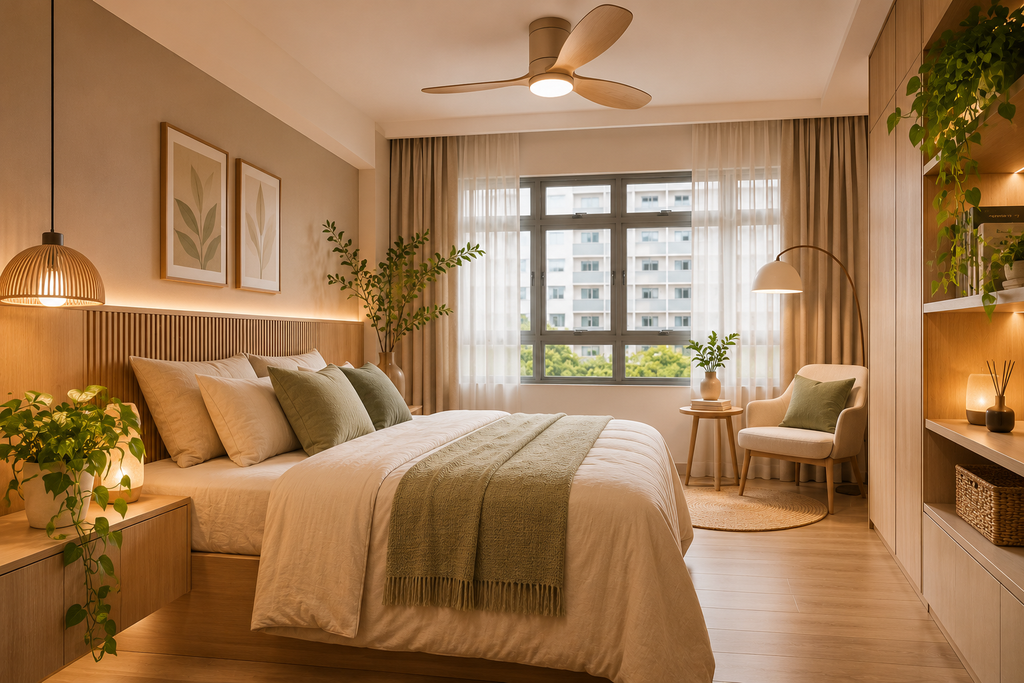
As homeowners place greater emphasis on comfort and everyday well-being, nature-inspired interior design is expected to become one of the defining Singapore interior design trends in 2027.
Drawing inspiration from biophilic design, this approach introduces natural materials, calming colours, greenery and soft lighting to create peaceful living environments.
For Singapore HDB homeowners, incorporating natural elements offers a simple way to transform compact interiors into welcoming spaces that encourage relaxation and comfortable everyday living.
Key Features of Nature-Inspired Interior Design
- Calming natural colours: Sage green, warm beige, soft ivory and earthy wood tones create a soothing atmosphere.
- Natural wood finishes: Oak-look laminates and timber textures bring organic warmth into bedrooms and living spaces.
- Indoor greenery: Carefully selected plants introduce freshness and visual interest.
- Soft, breathable fabrics: Linen, cotton and textured upholstery create a comfortable, relaxed appearance.
- Natural light and ventilation: Thoughtful window treatments help maintain a bright, airy interior.
- Gentle ambient lighting: Warm bedside lamps and indirect lighting create a restful environment in the evening.
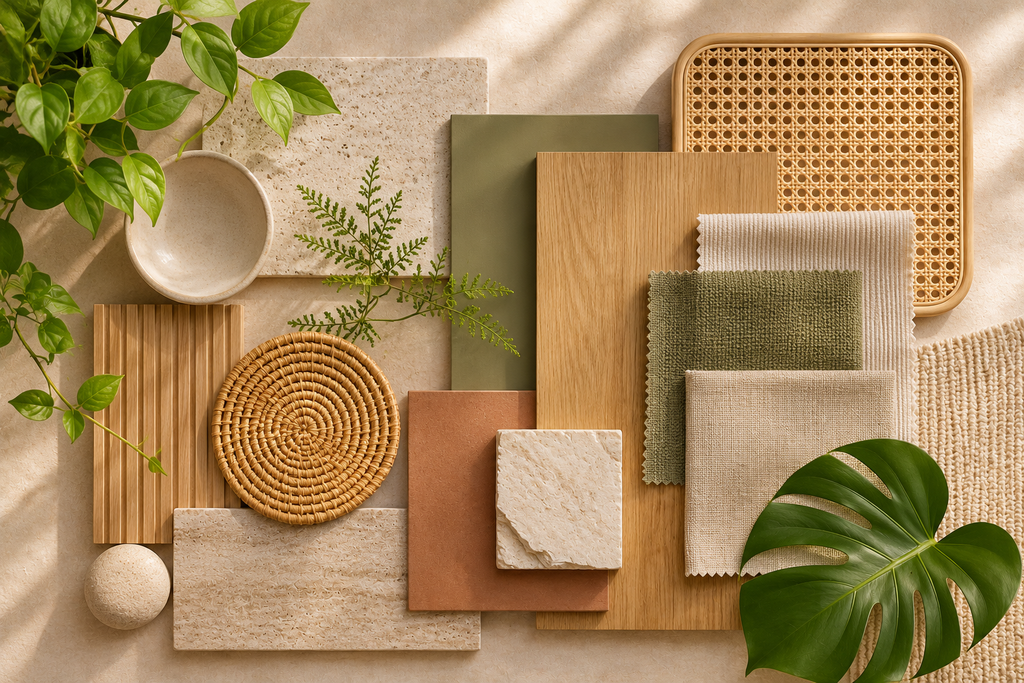
How to Create a Wellness-Focused HDB Bedroom
Start with a soothing colour palette, pairing soft sage green or warm ivory walls with light wood furniture and neutral bedding.
Layer the space with natural-looking textures, such as linen curtains, woven rugs and wooden bedside tables, to create warmth without excessive decoration.
Choose a few easy-care indoor plants suited to the room’s lighting conditions, and use sheer curtains to introduce natural daylight while maintaining privacy.
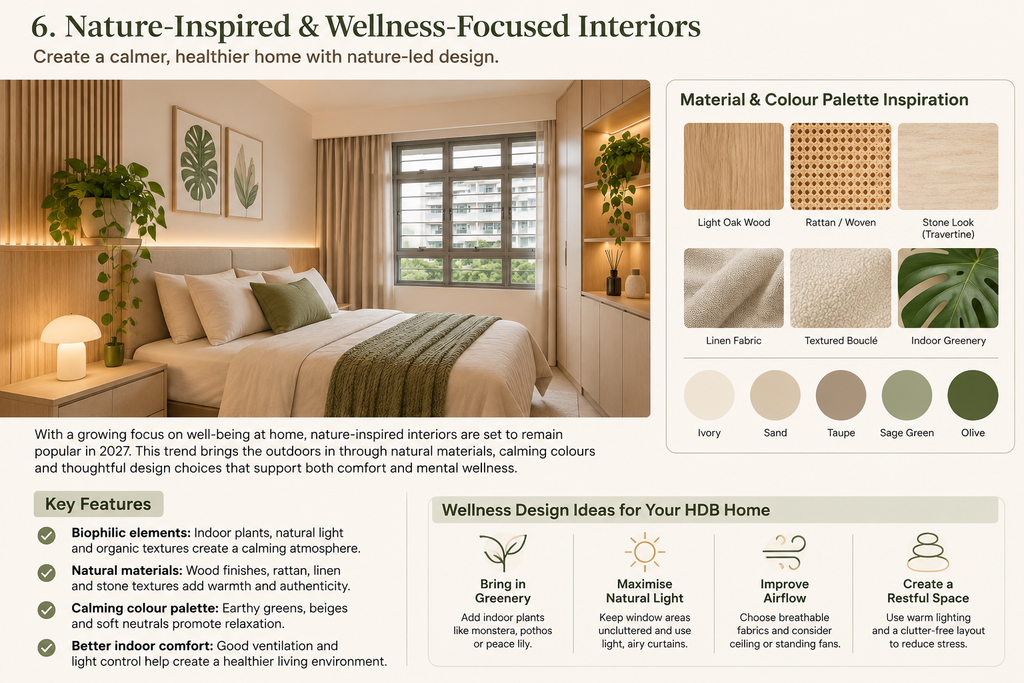
Todzterior Design Tip: A wellness-focused bedroom should feel relaxing rather than visually crowded. Keep the bed area uncluttered, introduce practical concealed storage and use layered lighting to support different activities throughout the day.
In Singapore’s humid climate, choose moisture-resistant finishes where appropriate and ensure that furniture placement does not obstruct ventilation.
7. Seamless Smart Home Integration: Technology That Blends Into Modern Living
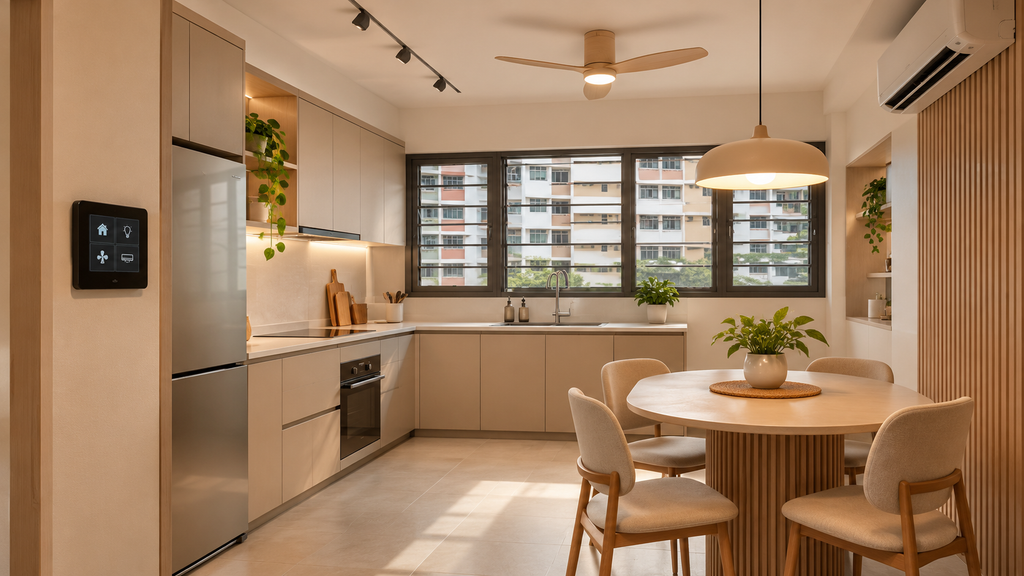
Smart technology is becoming an increasingly natural part of modern home design. As we look towards interior design trends in Singapore for 2027, homeowners are expected to embrace smart-home solutions that enhance everyday convenience without disrupting their interior aesthetics.
Rather than filling homes with visible gadgets and complicated systems, seamless smart-home integration focuses on discreet technology, intelligent lighting and thoughtfully planned electrical features.
For Singapore HDB homeowners, this approach offers a practical way to create a comfortable, contemporary home that feels both stylish and functional.
Key Features of Smart Home Interior Design
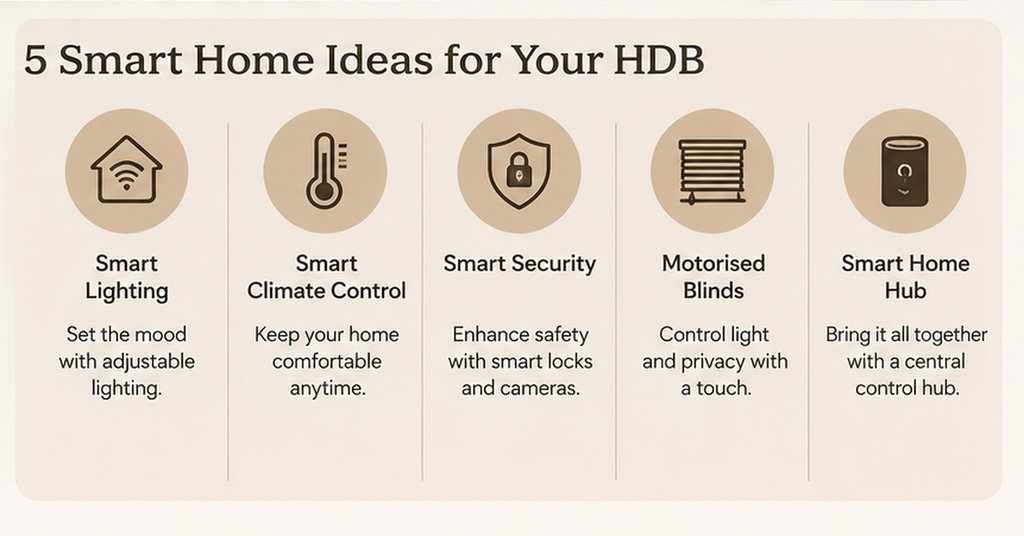
- Smart lighting systems: Adjustable lighting allows homeowners to create different moods for cooking, dining, working and relaxing.
- Automated curtains and blinds: Motorised window treatments offer convenient control over daylight and privacy.
- Integrated appliances: Built-in ovens, concealed kitchen appliances and coordinated cabinetry maintain a streamlined appearance.
- Discreet smart controls: Wall-mounted control panels and wireless devices reduce visual clutter.
- Smart climate control: Compatible air-conditioning controls and automated routines help homeowners manage indoor comfort.
How to Incorporate Smart Technology Into Your HDB Home
For a 4-room or 5-room HDB flat, start by identifying the smart features that will genuinely improve your daily routine.
Consider adjustable under-cabinet lighting in the kitchen, automated lighting scenes in the living room or motorised blinds in bedrooms.
During renovation planning, coordinate the placement of electrical points, control panels and concealed cables with your interior designer. This helps maintain a clean appearance and avoids unnecessary alterations later.
Todzterior Design Tip: Prioritise a reliable and user-friendly smart-home system over unnecessary features. Check device compatibility, internet connectivity requirements and manual control options before committing to a particular setup.
For HDB renovations involving new wiring, electrical points or modified switches, engage an EMA Licensed Electrical Worker and check whether HDB permits are required.
8. Personalised Interiors & Modern Nostalgia: Creating a Home That Tells Your Story
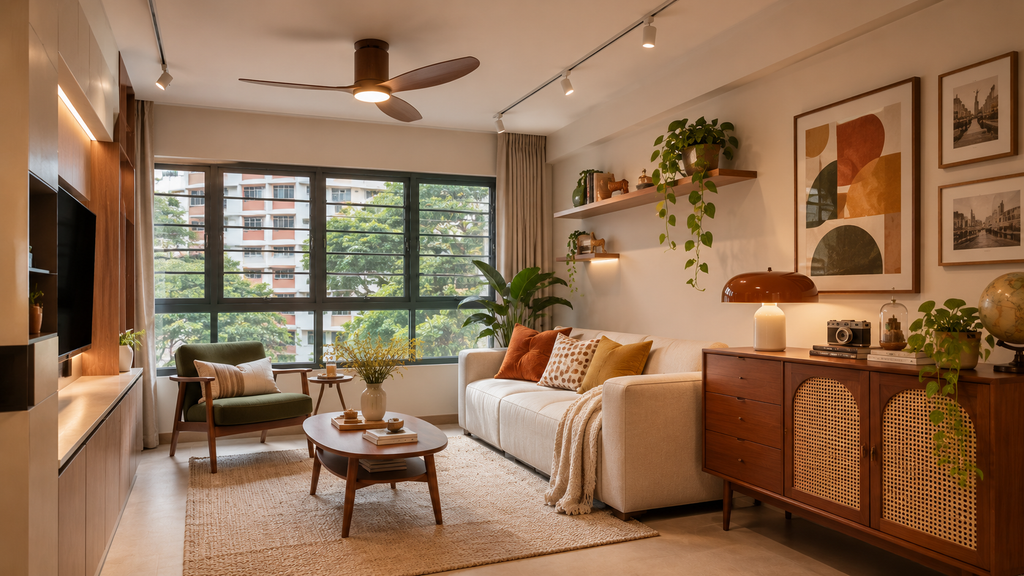
In 2027, interior design is expected to become more personal, moving away from perfectly coordinated showrooms towards homes filled with warmth, individuality and meaningful details.
Personalised interiors and modern nostalgia bring together contemporary furniture, vintage-inspired accents, characterful colours and sentimental decorative pieces. Instead of following one rigid design style, homeowners can combine elements that reflect their personality and experiences.
For Singapore HDB homeowners, this trend offers a refreshing way to create a distinctive living space while maintaining the functionality of a modern home.
Key Features of Modern Nostalgia Interior Design
- Vintage-inspired furniture: Mid-century sideboards, rounded armchairs and retro-style lighting bring character into contemporary spaces.
- Warm, expressive colours: Muted mustard, terracotta, olive green and walnut brown introduce nostalgic charm.
- Personal decorative pieces: Family photographs, artwork, travel souvenirs and meaningful collections make a home uniquely yours.
- Mixed textures and materials: Walnut finishes, rattan, ceramic tiles and patterned fabrics add depth and visual interest.
- Contemporary foundations: Clean carpentry, practical storage and uncluttered layouts keep the overall design balanced.
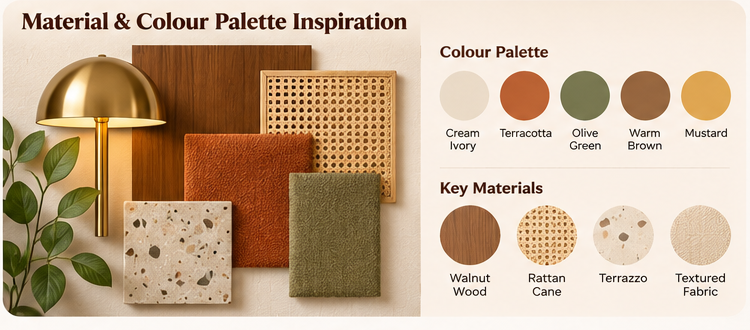
How to Bring Modern Nostalgia Into Your Singapore HDB
Start with a contemporary foundation using neutral walls, streamlined cabinetry and practical furniture arrangements.
Introduce nostalgic elements through a vintage-inspired sideboard, retro pendant lamp or carefully curated gallery wall. A few statement accessories can transform a simple HDB living room without requiring major renovation work.
For homeowners who enjoy bolder interiors, consider using muted olive green cabinetry, warm wood finishes or patterned tiles in selected areas.
The key is to combine old and new thoughtfully, allowing each piece to contribute to a cohesive, welcoming space.
Todzterior Design Tip: Choose one or two statement vintage-inspired pieces and build the remaining interior around them. This creates personality without making compact HDB rooms feel overcrowded.
For a more timeless result, use neutral built-in carpentry and introduce nostalgic colours or patterns through furnishings that can be updated easily.
How to Choose the Right Interior Design Trend for Your Singapore Home in 2027
With so many inspiring interior design trends in Singapore for 2027, choosing the right style can feel overwhelming. While aesthetics are important, the best interior design should also complement your home’s layout, renovation budget and everyday lifestyle.
Whether you’re renovating a compact 3-room HDB, a 4-room BTO or a spacious 5-room resale flat, consider how each trend can be adapted to your needs.
Which 2027 Interior Design Trend Suits Your Home?
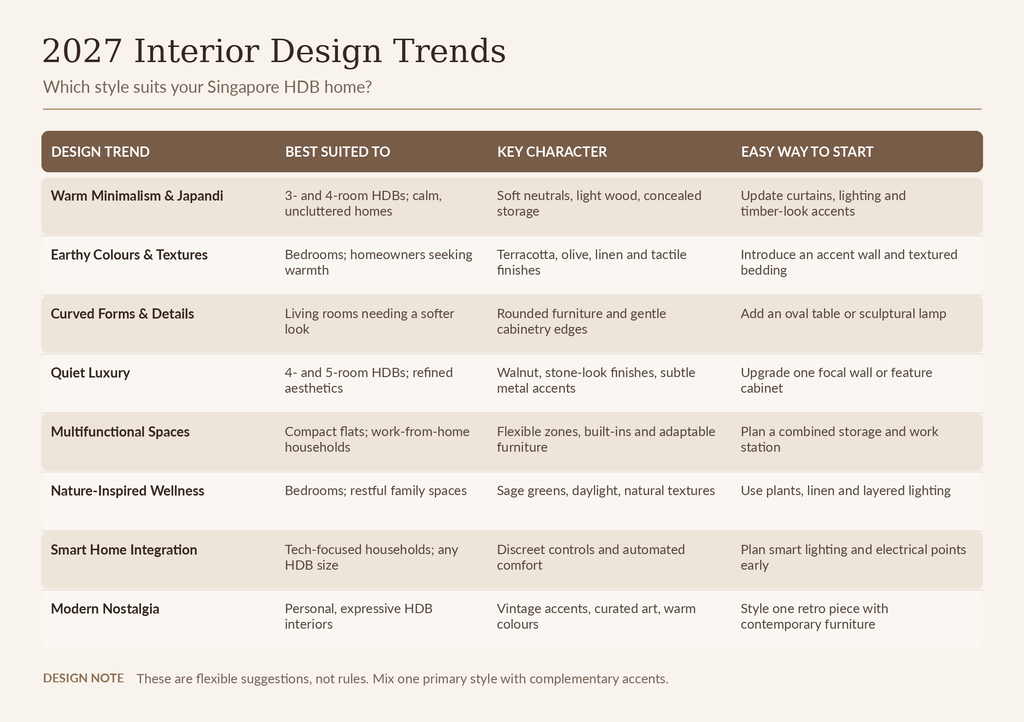
4 Things to Consider Before Choosing Your Interior Design Style
1. Your Home’s Layout and Available Space
For smaller HDB flats, warm minimalism and multifunctional layouts can help create a more spacious, organised environment. Larger homes may offer greater flexibility for statement furniture and distinctive design features.
2. Your Lifestyle and Daily Needs
Consider how you use your home. Families who work remotely may benefit from integrated study areas, while homeowners seeking a relaxing environment may prefer nature-inspired interiors.
3. Your Renovation Budget
Not every design trend requires extensive renovation work. Earthy colour palettes, curved furniture and nostalgic decorative pieces can often be introduced through furnishings and simple styling updates.
4. Long-Term Maintenance and Timeless Appeal
Select materials and finishes that suit your household’s needs. Prioritising durable carpentry, practical storage and easy-to-maintain surfaces helps keep your home comfortable and attractive over time.
Combining Interior Design Trends for a Personalised Home
You don’t need to follow just one interior design trend.
For example, a warm minimalist living room can incorporate curved furniture, while a quiet luxury bedroom can feature earthy colours and natural textures.
The key is maintaining a consistent colour palette, selecting complementary materials and ensuring that every design element serves a purpose.
Todzterior Design Tip: Begin with one primary design direction and introduce elements from one or two complementary trends. This creates a cohesive home that reflects your personality without making the overall interior feel overly busy.
Final Thoughts: Creating Your Dream Singapore Home in 2027
The interior design trends in Singapore for 2027 reflect a growing preference for homes that are stylish, comfortable and thoughtfully designed for everyday living.
From warm minimalism and quiet luxury to multifunctional spaces and personalised interiors, these emerging design directions offer exciting possibilities for Singapore homeowners.
However, creating a beautiful home isn’t simply about following the latest trends. It’s about choosing the right colours, materials and layouts that complement your lifestyle while remaining practical for years to come.
Whether you’re renovating a new BTO flat, upgrading a resale HDB or refreshing your condominium, the right interior design can transform your space into a home that truly reflects your personality.
Transform Your Home with Todzterior
Planning a home renovation in 2027?
At Todzterior, we believe every home deserves a thoughtful balance of aesthetics, functionality and personal expression.
Whether you’re drawn to the warmth of Japandi interiors, the elegance of quiet luxury or the practicality of multifunctional living spaces, our interior design team can help bring your vision to life.
Ready to create a home that’s uniquely yours?
Explore Todzterior’s interior design services and book a consultation to start planning your dream home.
Frequently Asked Questions About Interior Design Trends in Singapore 2027
1. What are the top interior design trends in Singapore for 2027?
Eight emerging interior design trends to watch in Singapore for 2027 are warm minimalism and evolved Japandi, earthy colours and layered textures, curved forms, quiet luxury, multifunctional spaces, nature-inspired interiors, seamless smart-home integration and modern nostalgia.
These trends emphasise comfortable, personalised and practical living environments.
2. Which interior design style is best for a small HDB flat?
Warm minimalism and multifunctional interior design are particularly suitable for smaller HDB flats.
Light colours, streamlined carpentry, concealed storage and space-saving furniture can help create a brighter, more organised home without compromising comfort.
3. Is Japandi interior design still popular in 2027?
Japandi remains a relevant design direction heading into 2027, although the aesthetic is evolving towards warmer colours, richer textures and more personalised details.
Homeowners can achieve this look through natural wood finishes, neutral palettes, comfortable furnishings and simple, functional layouts.
4. How can I make my HDB home look luxurious without overspending?
Focus on a coordinated colour scheme, quality laminates, thoughtful lighting and well-designed carpentry.
Instead of using expensive materials throughout your home, consider introducing one statement feature, such as a marble-look TV wall, elegant dining table or textured feature panel.
5. Can I combine multiple interior design trends in one home?
Yes. Combining complementary trends can create a more personalised interior.
For example, warm minimalism pairs beautifully with curved furniture and natural materials, while quiet luxury can incorporate smart-home features and earthy colours.
Maintain consistency in your colour palette, materials and overall design direction to achieve a cohesive result.
6. How early should I start planning my HDB renovation for 2027?
Ideally, begin researching interior design styles and discussing your requirements with an interior designer around three to six months before your intended renovation start date.
This provides time to explore layouts, establish a realistic budget, compare materials and prepare the necessary renovation arrangements. Actual lead times will depend on your project’s scope, contractor availability and required approvals.